Angle grinders are among the most versatile power tools used across construction, fabrication, engineering, manufacturing and maintenance industries. Whether cutting steel, grinding welds or preparing surfaces, they offer speed, precision and flexibility when paired with the correct abrasive.
However, the high rotational speeds that make angle grinders so effective also mean they must be used responsibly. Good preparation, proper equipment and correct operating techniques all contribute to safer and more efficient work.
This guide outlines practical safety recommendations to help users get the best performance from their equipment while reducing unnecessary risks.
Why Angle Grinder Safety Matters
An angle grinder can rotate an abrasive disc at thousands of revolutions per minute. At these speeds, even small mistakes can affect cutting quality, damage equipment or create avoidable hazards.
Following safe working practices can help you:
- Improve control during cutting and grinding
- Reduce unnecessary wear on abrasive products
- Achieve cleaner, more accurate results
- Minimise downtime caused by damaged equipment
- Promote a safer working environment
Safety and productivity often go hand in hand.
Wear the Right Personal Protective Equipment (PPE)
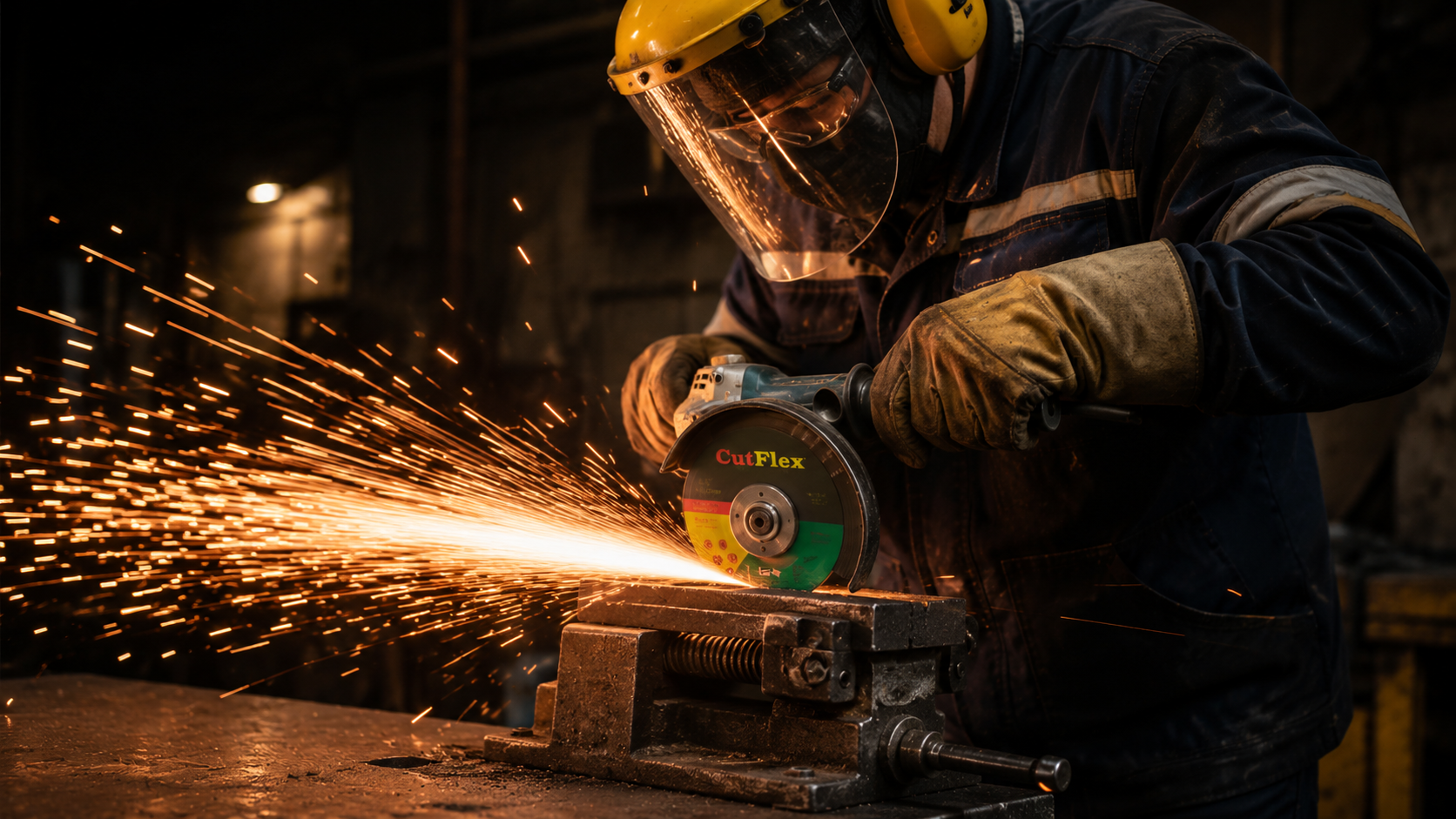
Before using an angle grinder, make sure you are wearing suitable PPE for the task.
Recommended equipment includes:
Safety Glasses
Protect your eyes from flying sparks, dust and metal particles.
Face Shield
A face shield provides additional protection against debris generated during cutting or grinding.
Hearing Protection
Angle grinders produce high noise levels, particularly during prolonged use.
Appropriate hearing protection helps reduce noise exposure.
Heavy-Duty Gloves
Gloves improve grip while helping protect your hands from sharp edges and hot materials.
Choose gloves appropriate for the task without compromising safe tool handling.
Protective Clothing
Wear close-fitting workwear made from durable materials.
Avoid loose clothing, jewellery or anything that could become caught in rotating equipment.
Safety Footwear
Protective footwear provides additional protection when working with heavy materials and equipment.
Inspect Your Angle Grinder Before Use
A quick inspection before every job can help identify potential issues.
Check for:
- Damaged power cables or batteries
- Loose handles
- Damaged guards
- Excessive vibration
- Loose spindle nuts
- General signs of wear
If the grinder appears damaged, it should be inspected and repaired before use.
Inspect the Abrasive Disc
Before fitting any abrasive:
Inspect it carefully for:
- Cracks
- Chips
- Missing sections
- Excessive wear
- Signs of moisture damage
Never use an abrasive disc that appears damaged.
Use the Correct Disc for the Job
Different abrasives are designed for different applications.
For example:
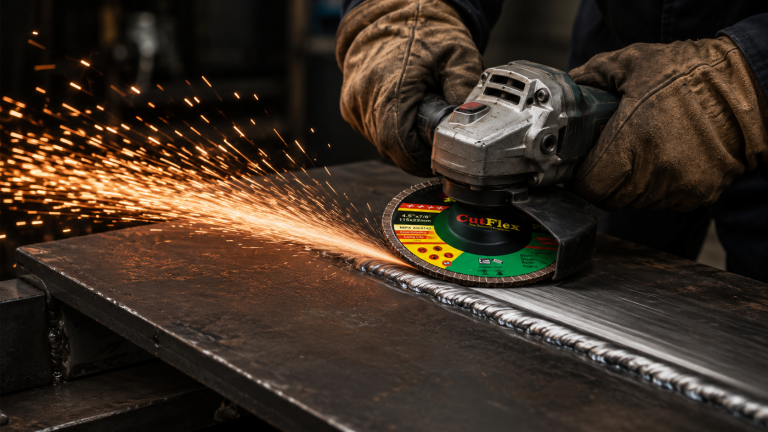
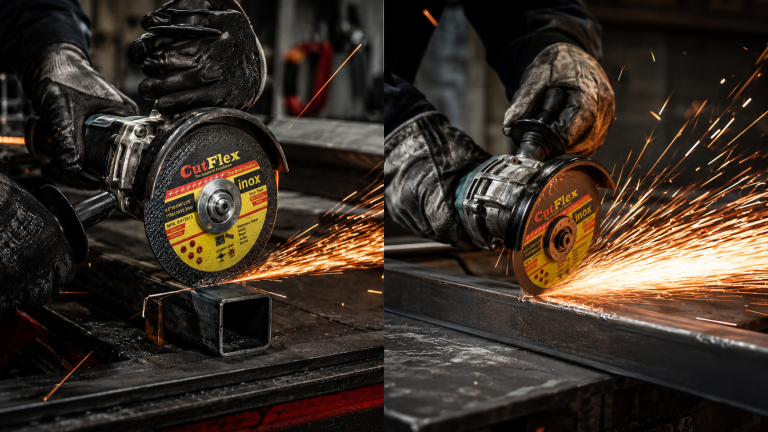
- Cutting discs for cutting
- Grinding discs for grinding
- Flap discs for finishing
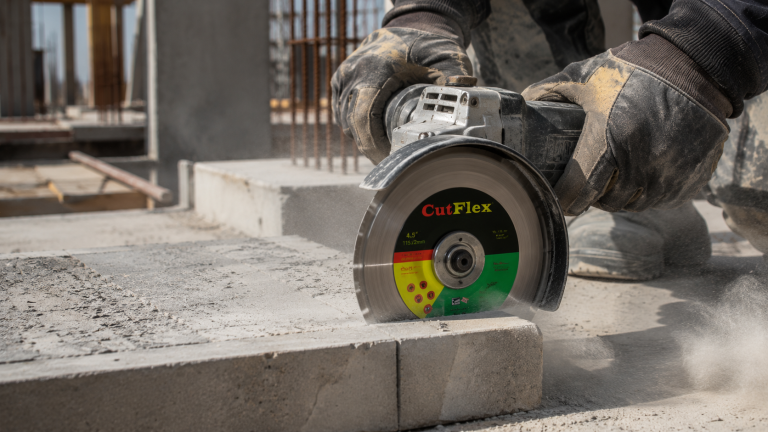
- Diamond blades for concrete and masonry
Using the correct product helps improve both safety and performance.
Check the Speed Rating
Every abrasive disc has a maximum operating speed.
Before installation:
- Confirm the grinder’s no-load speed.
- Check the disc’s maximum RPM.
- Ensure the disc is suitable for your machine.
Never exceed the recommended operating speed.
Always Keep the Guard Installed
The grinder guard is designed to help direct sparks and provide protection from debris.
Never remove the guard simply for convenience or easier access.
Adjust it correctly for the application while keeping it securely fitted.
Secure the Workpiece
Whenever possible:
- Clamp the material securely.
- Prevent unnecessary movement.
- Work on a stable surface.
A secure workpiece helps improve accuracy while reducing the likelihood of unexpected movement during cutting or grinding.
Maintain Proper Body Position
Stand in a balanced position with both hands on the grinder.
Avoid placing yourself directly in line with the rotating disc.
Maintaining good posture improves control and reduces fatigue during extended use.
Let the Disc Reach Full Speed
Before making contact with the material:
Allow the grinder to reach full operating speed.
Beginning the cut too early can reduce efficiency and increase unnecessary stress on the abrasive.
Let the Abrasive Do the Work
One of the most common mistakes is applying excessive force.
Instead:
- Use steady pressure.
- Maintain a consistent feed rate.
- Allow the abrasive to remove the material naturally.
Forcing the tool generally increases heat while reducing disc life.
Common Mistakes to Avoid
Using a Cutting Disc for Grinding
Cutting discs are intended only for straight cutting.
Grinding with a cutting disc places sideways pressure on the abrasive and should be avoided.
See Our Guide on the Difference between Cutting Discs VS Grinding Discs
Twisting the Disc During a Cut
Twisting can increase wear and reduce cutting performance.
Maintain a straight cutting path whenever possible.
Ignoring Worn Discs
Replace abrasive discs when they become excessively worn or damaged.
Continuing to use worn abrasives reduces efficiency.
Working Without PPE
Protective equipment should be worn even for quick jobs.
Small tasks can still generate sparks, dust and flying debris.
Using Damaged Equipment
Never continue working with damaged grinders, guards or abrasive discs.
Safe Storage of Abrasive Discs
Proper storage helps preserve product quality.
Store abrasives:
- In a clean, dry location
- Away from moisture
- Away from direct sunlight
- Flat where appropriate
- Protected from impact
Correct storage helps maintain reliable performance.