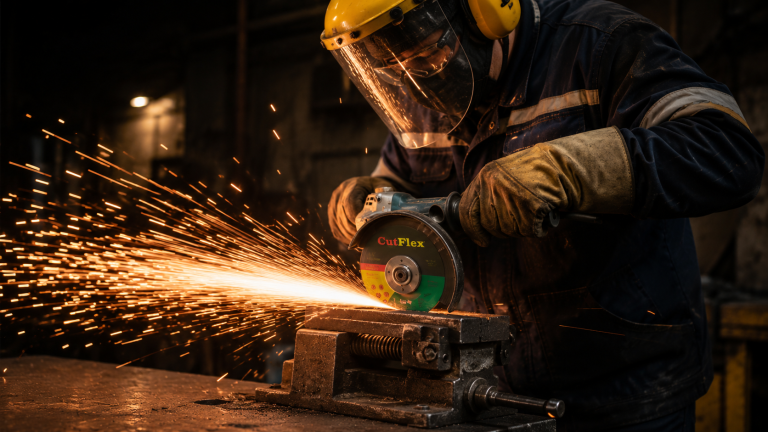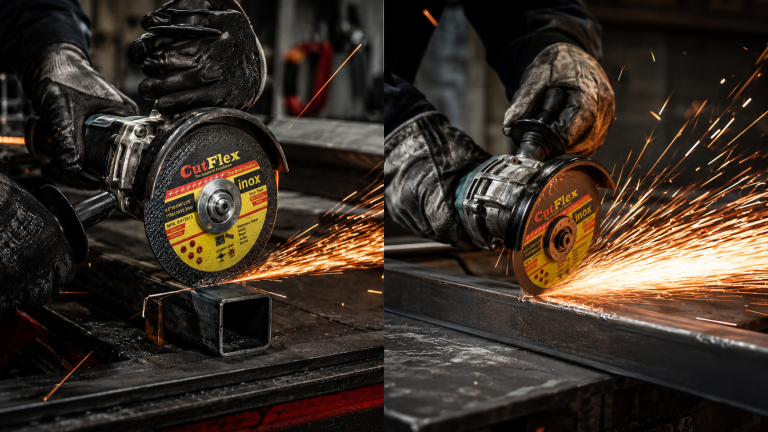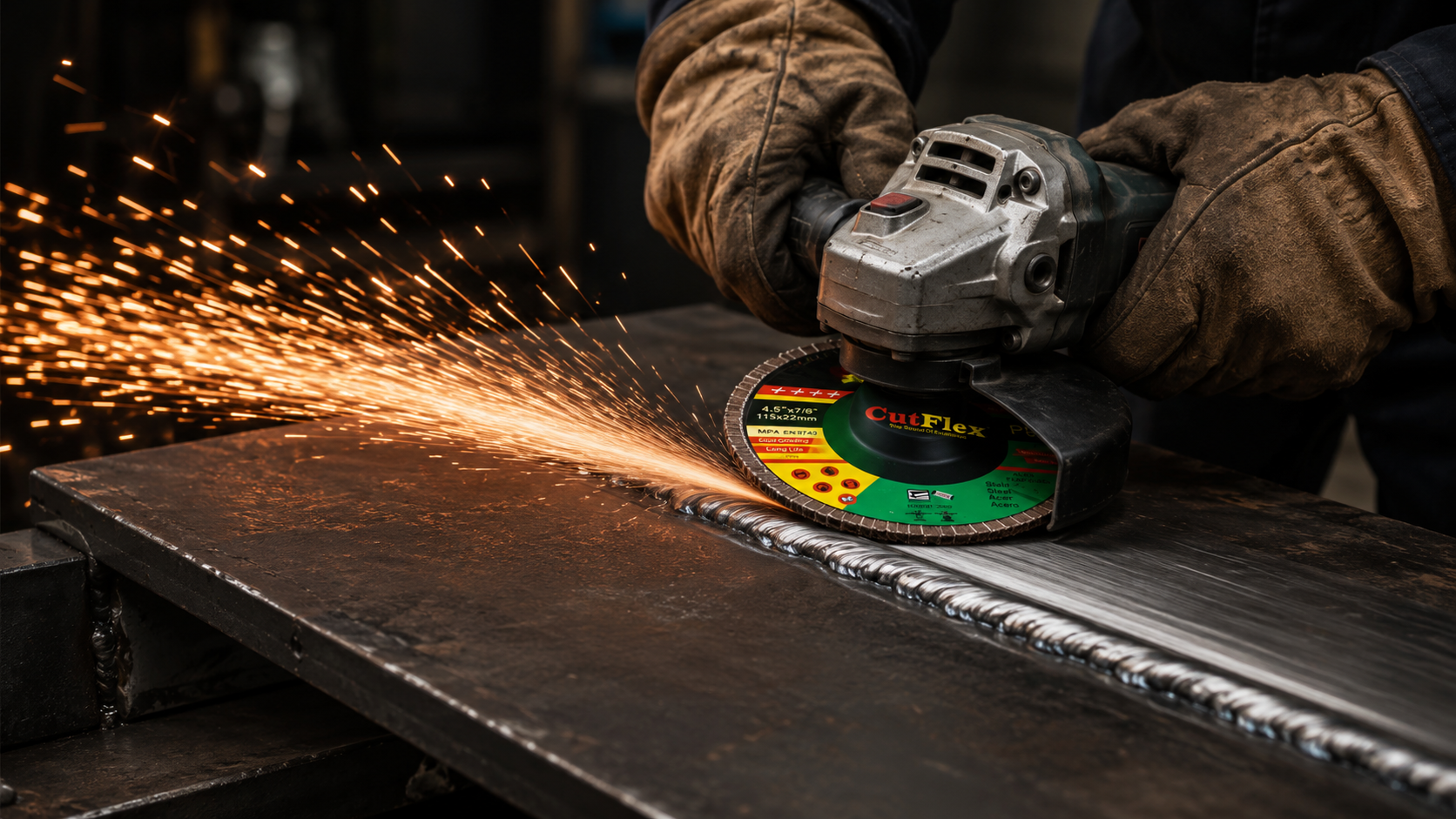
When a project requires more than simply cutting metal, flap discs become one of the most versatile abrasive tools available. They are widely used for grinding, blending, deburring and finishing, making them a popular choice in fabrication workshops, manufacturing facilities, construction sites and maintenance environments.
Unlike traditional grinding wheels, flap discs combine material removal with surface finishing, allowing operators to complete multiple stages of a job using a single abrasive. This can improve productivity, reduce tool changes and help achieve a cleaner finish.
In this guide, we’ll explore what flap discs are, how they work, the different grit options available, common applications and best practices for achieving consistent results.
What Is a Flap Disc?
A flap disc is an abrasive wheel made up of multiple overlapping pieces of abrasive material, known as flaps, which are bonded to a backing plate.
As the disc rotates, these flaps gradually wear away, exposing fresh abrasive material beneath. This self-renewing design helps maintain consistent performance throughout the life of the disc.
Because new abrasive material is continually exposed, flap discs often provide smoother operation and more consistent finishing than many conventional grinding wheels.
How Does a Flap Disc Work?
Each abrasive flap removes a small amount of material as it passes over the workpiece. Since many flaps are working together, the cutting action is distributed evenly across the disc.
This design offers several advantages:
- Consistent grinding performance
- Reduced vibration
- Better operator control
- Smoother surface finishes
- Gradual wear over time
Rather than leaving deep grinding marks, flap discs can produce a more refined finish suitable for many fabrication and finishing tasks.
Common Applications
Flap discs are suitable for a wide variety of metalworking applications, including:
- Smoothing welds
- Removing burrs
- Cleaning cut edges
- Blending welded joints
- Surface preparation before painting
- Removing light rust
- Deburring fabricated components
- Preparing stainless steel for finishing
Their versatility makes them one of the most commonly used abrasive accessories for angle grinders.
Understanding Flap Disc Grit
One of the most important factors when choosing a flap disc is grit size.
The grit determines how aggressively the disc removes material and the finish it leaves behind.
Coarse Grit (40 Grit)
Coarse flap discs are designed for rapid material removal.
Typical uses include:
- Heavy weld removal
- Edge chamfering
- Removing excess material
- Initial shaping
These discs prioritise speed over surface finish.
Medium Grit (60 Grit)
Medium grit provides a balance between material removal and finish quality.
Ideal for:
- General fabrication
- Weld blending
- Surface preparation
- Routine workshop applications
This is often a popular choice for day-to-day metalworking.
Fine Grit (80 Grit)
Fine grit discs remove less material while producing a smoother finish.
Suitable for:
- Finishing welds
- Preparing surfaces before coating
- Light blending
- Cosmetic finishing
Extra Fine Grit (120 Grit and Above)
Higher grit numbers are intended for finishing rather than aggressive grinding.
Applications include:
- Surface refinement
- Preparing stainless steel
- Final finishing before polishing
- Removing light imperfections
Choosing the Right Flap Disc
Before selecting a flap disc, consider the following:
What Material Are You Working On?
Different metals respond differently to abrasive products.
For example:
- Mild steel
- Stainless steel
- Structural steel
- Aluminium (where suitable abrasives are recommended)
Choosing an appropriate flap disc for the material helps achieve better results.
How Much Material Needs to Be Removed?
Heavy stock removal generally requires a coarser grit.
Light finishing typically benefits from finer grit options.
What Finish Are You Trying to Achieve?
If appearance is important, selecting the correct grit can significantly improve the final result.
For cosmetic work, progressing through finer grits often produces a smoother finish.
Benefits of Using Flap Discs
Compared to some traditional grinding wheels, flap discs offer several advantages:
- Grinding and finishing in one operation
- Consistent cutting action
- Smooth surface finishes
- Lower vibration
- Reduced operator fatigue
- Better control during grinding
- Gradual wear exposing fresh abrasive material
These benefits contribute to increased productivity in many workshop environments.
Common Mistakes to Avoid
Using Excessive Pressure
Applying too much pressure can generate unnecessary heat and reduce disc life.
Allow the abrasive to perform the work using steady, controlled pressure.
Selecting the Wrong Grit
Using a coarse grit for finishing or a fine grit for heavy stock removal can reduce efficiency.
Always match the grit to the application.
Grinding at the Wrong Angle
Maintaining a consistent grinding angle helps maximise performance and surface quality.
Continuing with a Worn Disc
As the abrasive becomes depleted, performance declines.
Replace the flap disc when it no longer delivers effective grinding or finishing.
Safety Tips
Whenever using a flap disc:
- Inspect the disc before use.
- Wear eye protection.
- Wear hearing protection.
- Wear gloves suitable for the task.
- Secure the workpiece.
- Ensure the grinder guard is correctly fitted.
- Follow the manufacturer’s speed recommendations.
- Allow the grinder to reach full operating speed before contacting the workpiece.
Safe operating practices contribute to better results and a safer working environment.