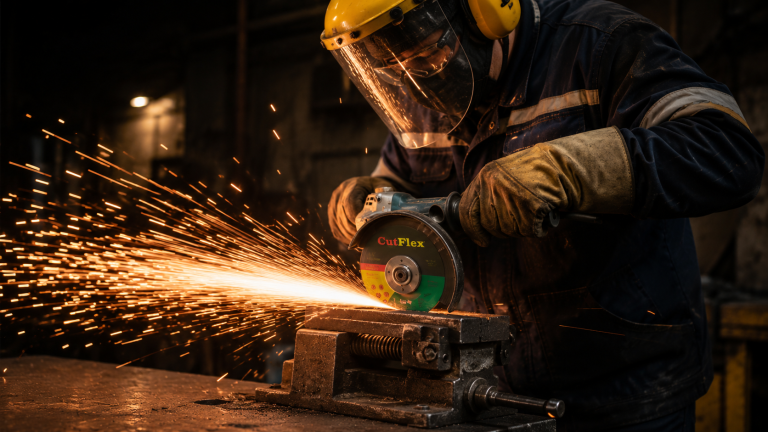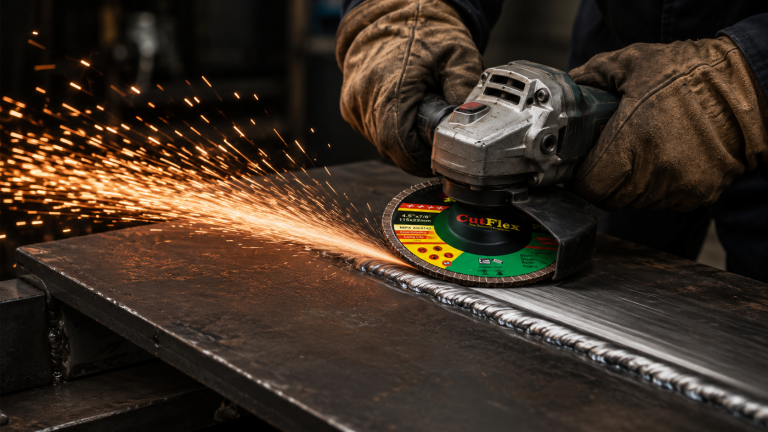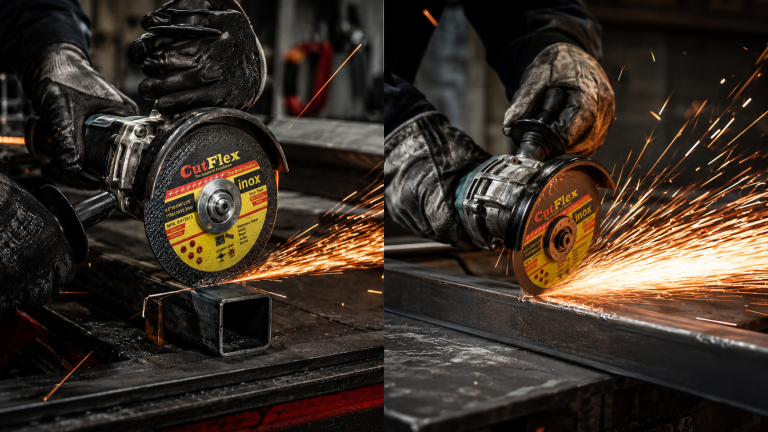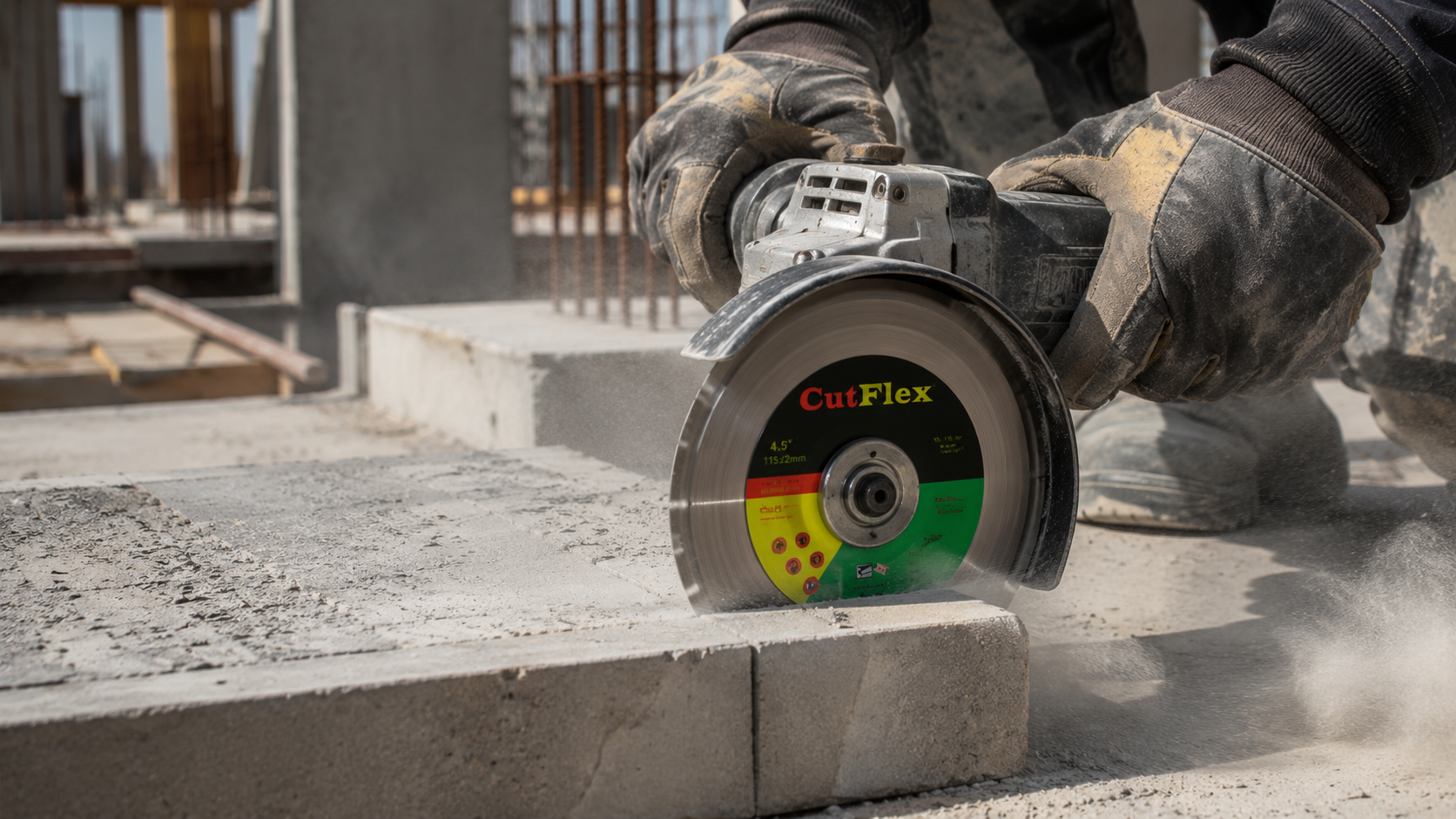
Whether you’re cutting concrete, paving, brick, stone or masonry, a diamond blade is one of the most effective cutting tools available. Designed for demanding applications, diamond blades provide precision, durability and consistent performance across a wide range of construction and industrial tasks.
Despite the name, a diamond blade doesn’t cut in the same way as a traditional saw blade. Instead, it uses industrial diamond particles embedded in the cutting edge to gradually grind through hard materials. This makes diamond blades highly effective for abrasive building materials that would quickly wear out conventional cutting discs.
In this guide, we’ll explain how diamond blades work, the different types available, how to choose the right blade for your application and the best practices for achieving reliable results.
What Is a Diamond Blade?
A diamond blade is a circular cutting blade with industrial diamond particles bonded to its outer edge.
Unlike abrasive cutting discs that gradually wear away as they cut, diamond blades are engineered to maintain a cutting edge through the exposure of fresh diamond particles over time.
This design allows them to cut hard materials efficiently while offering a longer service life in many applications.
Diamond blades are commonly used in:
- Construction
- Civil engineering
- Road maintenance
- Landscaping
- Masonry
- Tiling
- Concrete cutting
- Demolition work
How Does a Diamond Blade Work?
Rather than slicing through material like a knife, a diamond blade removes tiny particles through grinding.
The industrial diamonds on the rim create friction against the material, gradually wearing it away.
As the blade is used, the bonding material slowly wears down, exposing new diamond particles that continue the cutting process.
This continuous renewal helps maintain cutting performance throughout the blade’s lifespan.
Common Materials Diamond Blades Can Cut
Diamond blades are widely used for cutting:
- Concrete
- Reinforced concrete
- Brick
- Paving blocks
- Stone
- Masonry
- Roof tiles
- Natural stone
- Concrete pipes
- Cement products
Selecting a blade suitable for the material being cut helps improve efficiency and blade life.
Types of Diamond Blades
Different blade designs are intended for different applications.
Segmented Diamond Blades
Segmented blades feature visible gaps around the cutting edge.
Advantages include:
- Fast cutting
- Better cooling
- Dust removal
- Suitable for demanding construction work
Often used for:
- Concrete
- Brick
- Masonry
Continuous Rim Diamond Blades
Continuous rim blades have an uninterrupted cutting edge.
Benefits include:
- Cleaner cuts
- Reduced chipping
- Smooth finishes
Often chosen for:
- Tiles
- Porcelain
- Ceramic materials
Turbo Diamond Blades
Turbo blades combine fast cutting with smoother finishes.
The specially designed rim improves airflow while maintaining aggressive cutting performance.
Suitable for:
- Concrete
- Brick
- Stone
- General construction
Choosing the Right Diamond Blade
Several factors influence blade selection.
Material
The first question should always be:
What am I cutting?
Concrete, paving, brick and natural stone all place different demands on the blade.
Using the correct blade improves performance and helps maximise blade life.
Blade Diameter
Diamond blades are available in multiple diameters to suit different machines.
Always ensure the blade matches your equipment specifications.
Never install a blade larger than the machine is designed to accommodate.
Dry Cutting or Wet Cutting
Some blades are suitable for dry cutting, while others are designed for wet cutting or both.
Wet cutting can:
- Reduce dust
- Lower blade temperature
- Extend blade life
- Improve cutting consistency
Always follow the manufacturer’s recommendations regarding blade use.
Common Applications
Diamond blades are widely used for:
- Cutting concrete slabs
- Trimming paving stones
- Cutting bricks
- Landscaping projects
- Construction work
- Road repairs
- Demolition
- Installing concrete pipes
- Renovation projects
Their durability makes them a preferred choice for many demanding environments.
Tips for Better Cutting Performance
To achieve the best results:
- Inspect the blade before use.
- Match the blade to the material.
- Use steady cutting pressure.
- Allow the blade to cut naturally.
- Avoid twisting the blade.
- Follow the recommended operating speed.
- Keep the machine in good condition.
Proper technique helps maintain blade performance while producing cleaner cuts.
Common Mistakes to Avoid
Using the Wrong Blade
Different materials require different blade designs.
Forcing the Cut
Excessive pressure creates unnecessary heat and can reduce blade life.
Ignoring Blade Wear
Replace damaged or excessively worn blades promptly.
Operating Above the Recommended Speed
Always ensure the blade’s maximum operating speed is compatible with your machine.
Safety Tips
Whenever using a diamond blade:
- Wear eye protection.
- Wear hearing protection.
- Wear gloves suitable for the task.
- Secure the workpiece.
- Inspect the blade before use.
- Ensure the guard is correctly installed.
- Follow the machine manufacturer’s safety instructions.
Safe operation contributes to both productivity and operator protection.