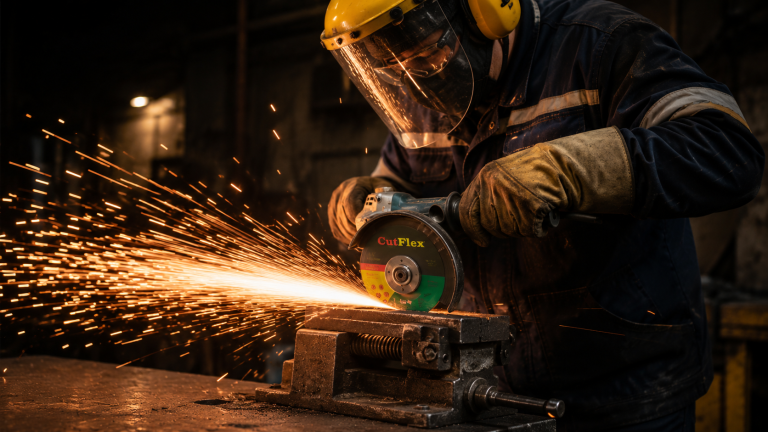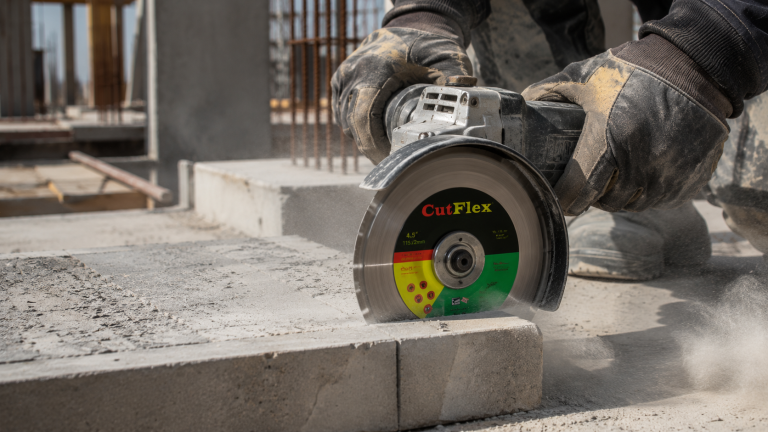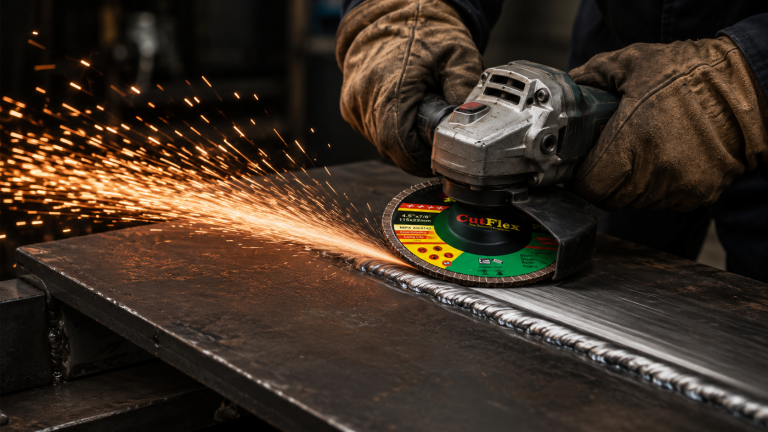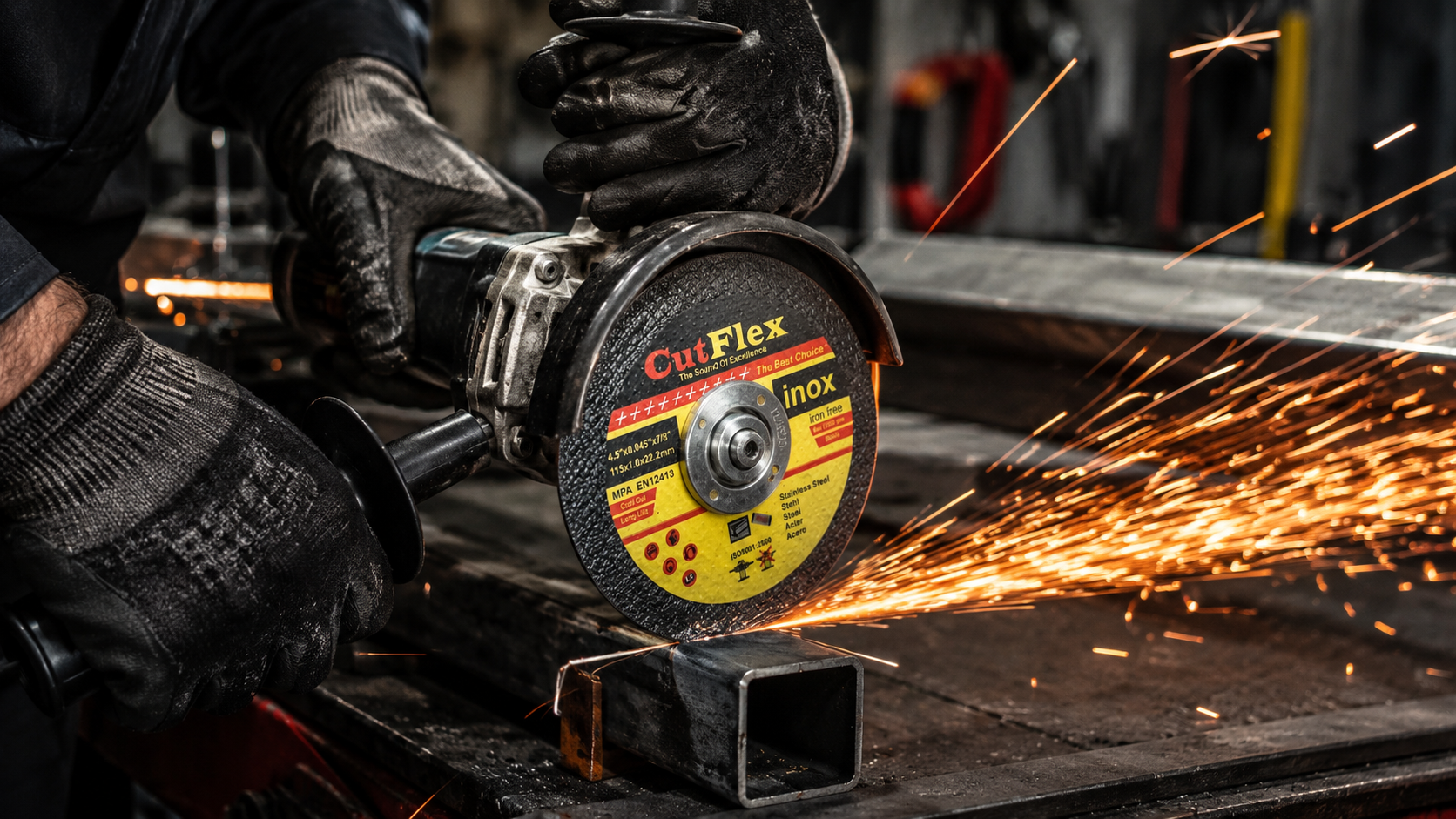
Metal cutting is a task performed every day in industries ranging from steel fabrication and manufacturing to construction, automotive repair and maintenance. While angle grinders make the job fast and efficient, the quality of the result depends heavily on selecting the correct cutting disc.
Choosing the wrong disc can lead to slower cutting, excessive disc wear, rough finishes and unnecessary strain on both the operator and the equipment. By understanding how different cutting discs are designed and how they interact with various metals, you can improve productivity while helping to maintain safe working practices.
This guide explains the key factors to consider when selecting a cutting disc for metal applications.
Why the Correct Cutting Disc Matters
A cutting disc is engineered to remove material efficiently while maintaining stability at high rotational speeds. Different metals have different properties, including hardness, density and heat resistance, which means a single disc may not be suitable for every application.
Using the right cutting disc can help you:
- Achieve cleaner, straighter cuts
- Reduce cutting time
- Extend disc life
- Minimise burr formation
- Reduce heat build-up
- Improve overall safety
Selecting the correct abrasive is one of the simplest ways to improve performance in the workshop or on-site.
Identify the Metal You're Cutting
The first step is understanding the material.
Mild Steel
Mild steel is commonly used in structural fabrication, machinery, gates, trailers and general engineering.
Typical examples include:
- Flat bar
- Angle iron
- Square tubing
- Round tubing
- Steel plate
General-purpose metal cutting discs are commonly used for these applications.
Stainless Steel
Stainless steel generates more heat during cutting and requires clean, precise results.
When working with stainless steel, choose a cutting disc that is suitable for stainless steel applications. This helps produce cleaner cuts and reduces the risk of contamination that could affect the material’s corrosion resistance.
Aluminium
Aluminium is softer than steel and behaves differently during cutting. Selecting an abrasive suitable for non-ferrous metals helps improve cutting efficiency and reduce loading.
Cast Iron
Cast iron is brittle and requires controlled cutting techniques to minimise chipping and excessive vibration.
Select the Correct Disc Diameter
Cutting discs are available in several standard sizes.
115 mm
Ideal for:
- Thin metal
- Light fabrication
- Maintenance work
125 mm
Suitable for:
- General workshop use
- Steel fabrication
- Pipe cutting
180 mm
Designed for:
- Larger steel sections
- Industrial fabrication
230 mm
Best suited to:
- Heavy construction
- Thick steel
- Large structural components
Choose a disc size that matches your angle grinder. Never fit a disc larger than the machine’s specified capacity.
Consider Disc Thickness
Disc thickness affects both cutting speed and durability.
Thin Cutting Discs
Thin discs are well suited for:
- Stainless steel
- Sheet metal
- Precision work
Benefits include:
- Faster cutting
- Reduced heat
- Narrower kerf
- Less material waste
Thicker Cutting Discs
Thicker discs are commonly chosen when durability is the priority.
Advantages include:
- Greater strength
- Longer lifespan
- Better performance during demanding applications
Match the Disc to the Application
Different jobs place different demands on the disc.
For example:
- Cutting thin sheet metal requires accuracy and minimal distortion.
- Cutting heavy structural steel requires durability and stability.
- Production environments often benefit from premium discs designed for consistent performance.
Understanding the application helps you make a better purchasing decision.
Check the Maximum RPM
Every cutting disc has a maximum operating speed.
Before installing a disc:
- Check the grinder’s no-load speed.
- Ensure the disc’s maximum RPM meets or exceeds the grinder’s speed.
- Never exceed the manufacturer’s speed rating.
Operating beyond the specified speed can compromise safety and performance.
Inspect the Disc Before Use
Before starting work, inspect the disc for:
- Cracks
- Chips
- Excessive wear
- Moisture damage
- Other visible defects
A damaged cutting disc should never be used.
Safe Operating Practices
To achieve the best results:
- Wear eye, hearing and hand protection.
- Secure the material before cutting.
- Allow the grinder to reach full speed before making contact.
- Use steady, even pressure.
- Avoid twisting the disc during the cut.
- Never use a cutting disc for grinding.
These simple practices improve both cutting performance and operator safety.
Common Mistakes When Choosing a Cutting Disc
Buying Based Only on Price
A lower-priced disc may wear faster, requiring more frequent replacements.
Using One Disc for Every Material
Different metals respond differently to abrasive products.
Selecting the correct disc for the material generally produces better results.
Ignoring Machine Specifications
Disc diameter, bore size and speed rating must always be compatible with the angle grinder.
Using Worn Discs Beyond Their Useful Life
A heavily worn disc cuts less efficiently and should be replaced when performance declines.