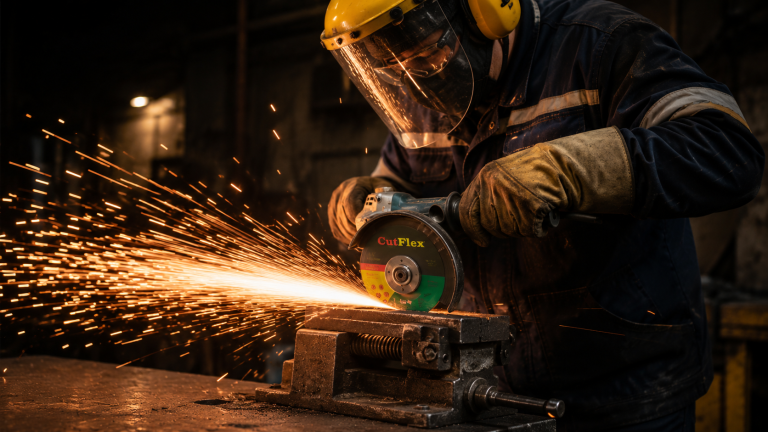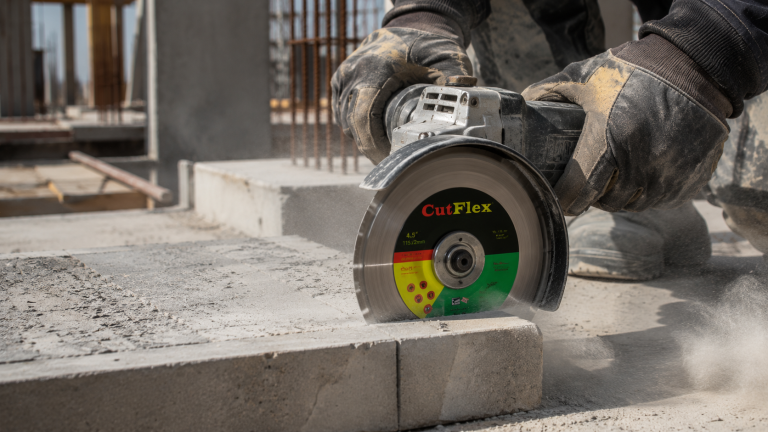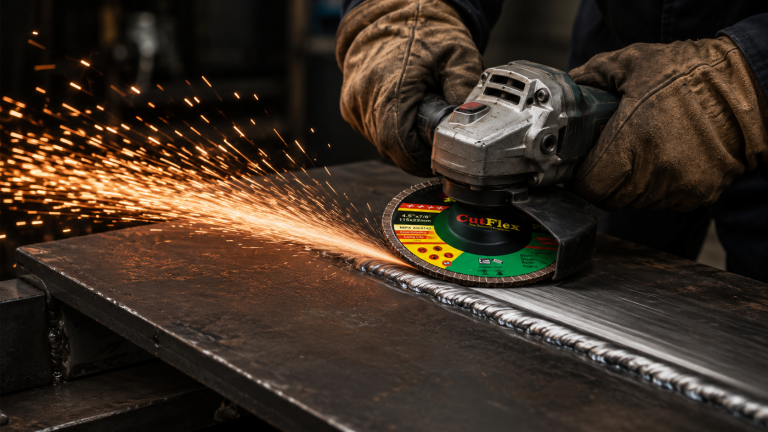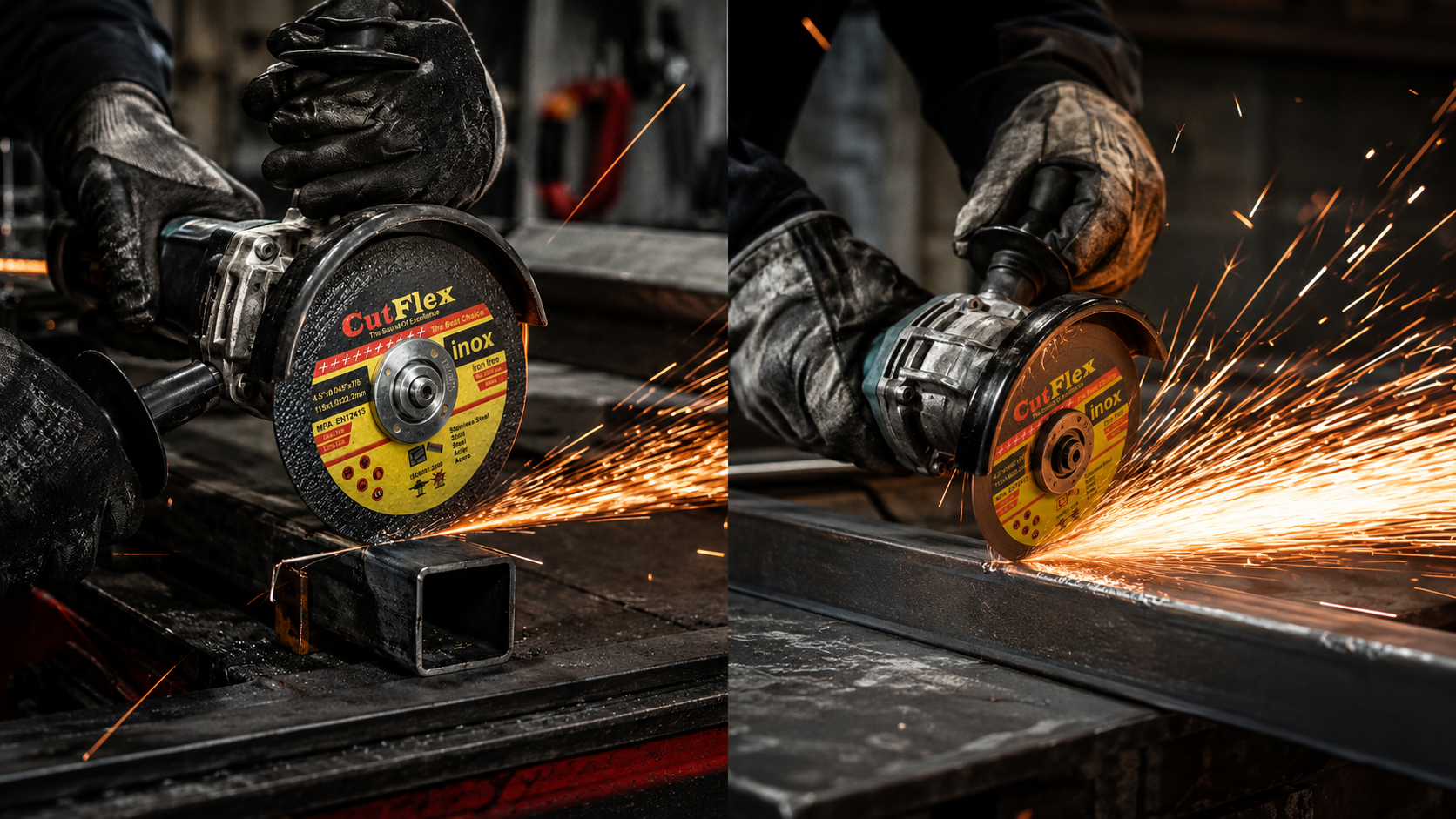
At first glance, cutting discs and grinding discs can appear very similar. Both are mounted on angle grinders, both are abrasive products, and both are commonly used in fabrication workshops, construction sites and industrial environments.
However, despite these similarities, they are designed for completely different purposes.
Using the wrong disc not only reduces efficiency but can also create unnecessary wear, poor-quality results and increased safety risks. Understanding the difference between cutting and grinding discs helps ensure better performance, longer disc life and safer operation.
In this guide, we’ll explain the key differences, when each disc should be used, and how to choose the right abrasive for your task.
What Is a Cutting Disc?
A cutting disc is designed specifically for making narrow, straight cuts through material.
Its thin profile allows it to remove as little material as possible while producing fast, accurate cuts.
Typical applications include:
- Cutting steel tubing
- Cutting flat bar
- Cutting reinforcing steel
- Trimming steel plate
- Cutting stainless steel
- General fabrication work
The primary purpose of a cutting disc is to separate material—not to shape or smooth it.
What Is a Grinding Disc?
A grinding disc is designed to remove material from the surface of a workpiece rather than cutting all the way through it.
Grinding discs are generally thicker and stronger than cutting discs, allowing them to withstand sideways pressure during grinding operations.
Typical applications include:
- Removing welds
- Smoothing rough edges
- Preparing metal before painting
- Removing excess material
- Cleaning steel surfaces
- Beveling edges
Rather than creating a cut, a grinding disc reshapes or finishes the material.
The Main Differences
Disc Thickness
One of the easiest ways to distinguish the two is by thickness.
Cutting Disc
- Thin profile
- Designed for straight cuts
- Removes minimal material
- Faster cutting action
Grinding Disc
- Much thicker
- Designed for surface grinding
- Removes larger amounts of material
- Built to handle side pressure
Intended Use
Cutting discs are intended only for cutting.
Grinding discs are intended only for grinding.
While both attach to an angle grinder, they should never be used interchangeably.
Cutting Performance
A cutting disc creates:
- Clean cuts
- Narrow kerf
- Reduced material waste
- Faster cutting speed
Grinding discs are not designed for this purpose and will generally produce poor cutting performance.
Grinding Performance
Grinding discs excel at:
- Smoothing welds
- Removing imperfections
- Surface preparation
- Edge finishing
Attempting these tasks with a cutting disc is unsafe and may damage the disc.
Can You Grind with a Cutting Disc?
No.
This is one of the most common mistakes made by inexperienced users.
A cutting disc is designed for straight-line cutting only.
Applying sideways pressure while grinding places stress on the disc that it was not designed to withstand.
This may result in:
- Premature wear
- Reduced performance
- Disc failure
- Increased safety risk
If grinding is required, always change to a dedicated grinding disc.
Can You Cut with a Grinding Disc?
Technically, a grinding disc can remove enough material to cut through some workpieces, but it is not designed for efficient cutting.
Compared with a cutting disc, it will generally:
- Cut much slower
- Remove more material
- Produce rougher cuts
- Require more effort
- Generate additional heat
For accurate and efficient cutting, always use a proper cutting disc.
When Should You Use a Cutting Disc?
Choose a cutting disc when you need to:
- Cut steel tubing
- Cut angle iron
- Shorten threaded rod
- Trim reinforcing steel
- Cut stainless steel
- Separate metal components
If the goal is to cut completely through the material, a cutting disc is the correct choice.
When Should You Use a Grinding Disc?
Choose a grinding disc when you need to:
- Smooth welds
- Remove excess weld material
- Prepare steel for painting
- Clean rough edges
- Shape metal surfaces
- Remove rust from weld areas
Grinding discs are designed for controlled material removal rather than separation.
Safety Considerations
Using the correct abrasive for the correct task is an important part of safe operation.
Always remember to:
- Inspect the disc before use.
- Ensure the disc matches the grinder specifications.
- Wear appropriate PPE.
- Keep the grinder guard installed.
- Allow the tool to reach full speed before beginning work.
- Never force the abrasive through the material.
Perhaps the most important rule is this:
Never use a cutting disc for grinding.
Which Disc Lasts Longer?
There is no single answer because the lifespan depends on the application.
A cutting disc is engineered for efficient cutting and gradually wears away during use.
A grinding disc is built to withstand continuous surface grinding and is generally thicker, allowing it to endure extended grinding applications.
Using each disc for its intended purpose helps maximise its working life.
Choosing the Right Abrasive
Before starting any project, ask yourself one simple question:
Am I cutting the material, or am I removing material from the surface?
If you’re separating material, use a cutting disc.
If you’re smoothing, cleaning or shaping the surface, use a grinding disc.
Making the correct choice improves productivity, delivers better results and helps maintain safe working practices.
See Our Guide on Choosing The Right Disc For Every Application